
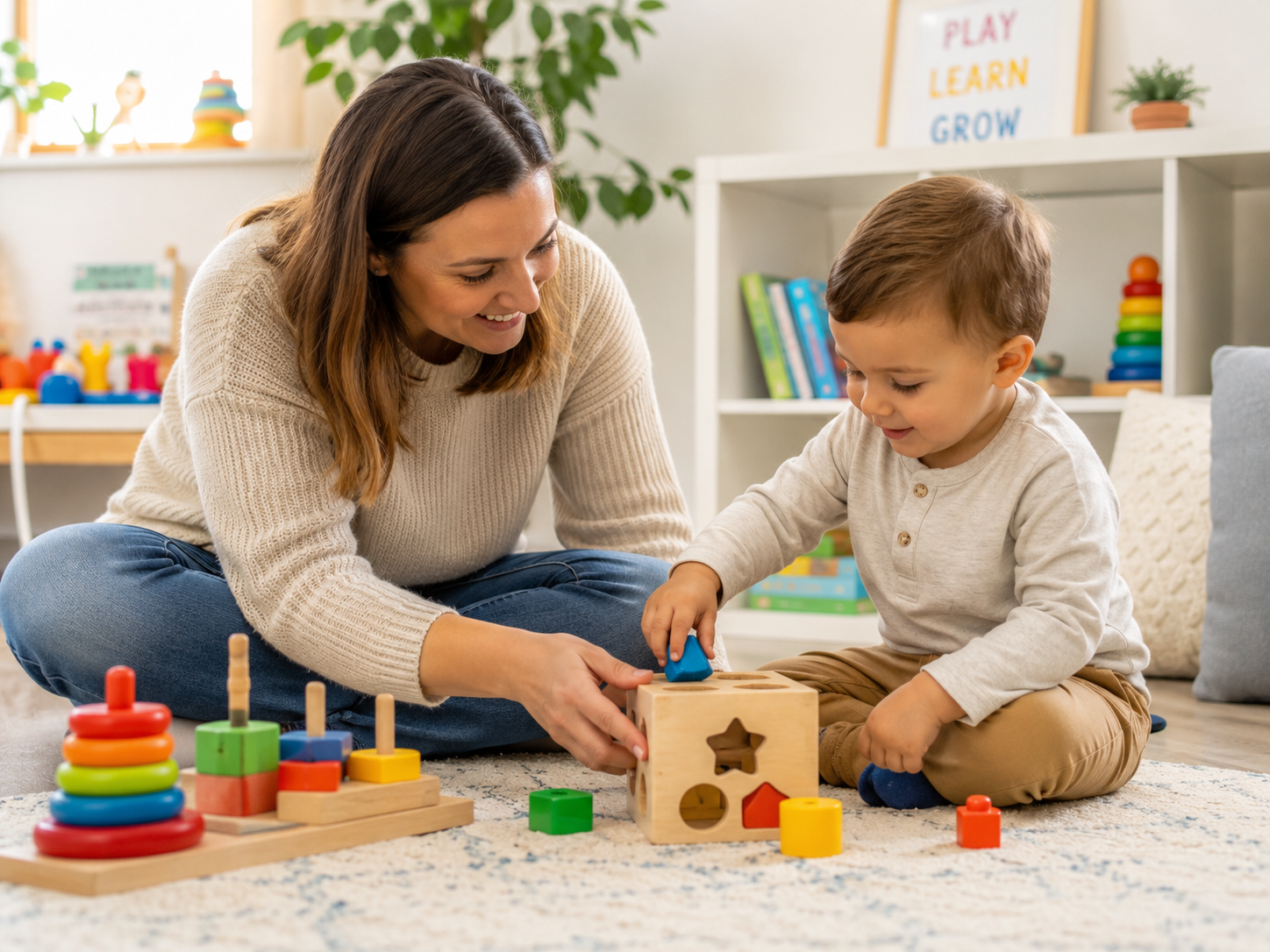
Early intervention is support that helps children strengthen important developmental, communication, social, emotional, behavioral, and daily living skills as early as possible. For parents who are wondering what early intervention is, the goal is simple: provide children and families with guidance early, before challenges become harder to manage.
For many families, the early signs of developmental delay can be confusing. A child may be behind in speech, have difficulty with social interaction, or struggle with daily routines. Some children may also show behaviors that make everyday life harder for the child and family. When these concerns continue, support can help parents better understand what their child needs. It can also help families support progress at home, at school, and in the community.
Early Intervention Play provides play-based, family-centered support for children ages 0–18. Support may help with developmental skills, communication, behavior, emotional regulation, social interaction, or daily routines.
The goal is to help children make progress in a supportive and practical way. Support is also connected to real life at home, school, and in the community.ommunity.
Family-centered early intervention support
Early intervention is not about labeling a child. It is about giving families the right support, tools, and guidance so children can build communication, social, emotional, behavioral, and daily living skills with confidence. Learn more about our play-based support services.
Why Early Intervention Matters for Child Development
Every child develops at their own pace, but ongoing challenges with communication, behavior, social interaction, emotional regulation, daily routines, or developmental milestones may be signs that extra support could help. Early intervention gives children support during important stages of child development, when families may be able to build helpful routines and skills sooner.
Early intervention gives parents and caregivers practical strategies during important stages of development. Instead of waiting to see if speech delays, behavior concerns, social challenges, or daily routine struggles improve on their own, families can begin using play-based support to help their child build skills in a positive and consistent way.
The goal of early intervention is not to pressure a child or rush development. The goal is to meet the child where they are, understand their strengths and needs, and help them make steady progress over time through supportive, family-centered strategies.
Common Signs a Child May Benefit From Early Intervention Support
Every child develops differently, and one sign by itself does not always mean there is a serious concern. However, parents may want to consider early intervention support if they notice ongoing developmental, communication, social, emotional, behavioral, or daily routine challenges in areas like:
Speech delays, language development concerns, or difficulty communicating needs
Difficulty with social interaction, shared play, or connecting with others
Emotional regulation challenges, frequent frustration, or difficulty calming down
Struggles with daily routines, transitions, independence, or self-help skills
Behavior concerns that make home, school, or community life harder
Developmental delays or milestone concerns that continue over time
How Early Intervention Services Help Children and Families
Early intervention services support more than the child. They also help parents and caregivers understand their child’s developmental needs, communication style, behavior patterns, emotional responses, and daily routine challenges.
Parents and caregivers often want to help, but they may not know which strategies to use, what certain behaviors may mean, or how to support their child during everyday routines. Early intervention services give families practical guidance they can use at home, at school, and in the community so support continues beyond the session.
Through play-based early intervention, children can practice communication, social interaction, emotional regulation, problem-solving, behavior skills, and daily living skills in a way that feels natural. Families also learn how to encourage progress during everyday moments like playtime, meals, transitions, bedtime routines, school preparation, and community outings.
This makes early intervention support feel less overwhelming and more connected to real life, because families can use simple strategies during the moments that already happen every day.
What Play-Based Early Intervention Support Can Look Like
Play-based early intervention support helps children practice developmental, communication, social, emotional, behavioral, and daily living skills in a way that feels natural, engaging, and connected to everyday life.
Communication
Children can practice speech, language, gestures, choices, and social communication during play-based activities and daily routines.
Social Skills
Play gives children opportunities to take turns, share attention, follow simple directions, manage emotions, and connect with others.
Daily Routines
Families can learn practical early intervention strategies for transitions, bedtime, meals, school routines, self-help skills, and community activities.
When Parents Should Consider Early Intervention Services
Parents do not have to wait until a developmental concern feels overwhelming before asking for support. If a child is consistently struggling with communication, social interaction, daily routines, behavior, emotional regulation, or developmental milestones, early intervention services can help the family better understand what may be happening and what steps may support progress.
Seeking early intervention support does not mean something is wrong with the child. It means the family is being proactive. With the right guidance, parents and caregivers can learn practical strategies that help their child build confidence, reduce frustration, strengthen developmental skills, and participate more successfully in everyday life.
Every child develops differently, so early intervention services should be individualized to the child’s strengths, developmental needs, family routines, and everyday environments.
Take the first step toward your child’s brightest future.
Request an AppointmentFrequently Asked Questions About Early Intervention
What is early intervention?
Early intervention is support that helps children build developmental, communication, social, emotional, behavioral, and daily living skills as early as possible. It also gives parents practical guidance they can use during everyday routines.
What are common signs a child may need early intervention support?
Common signs may include speech delays, developmental delays, difficulty with social interaction, behavior concerns, emotional regulation challenges, struggles with routines, or milestone concerns that continue over time.
Does my child need a diagnosis before getting support?
No. Many families seek support because they notice developmental, communication, behavioral, or social concerns and want guidance. Early support can begin with understanding the child’s needs and deciding what next steps make sense.
How does play-based support help children?
Play-based early intervention helps children practice important skills in a natural and engaging way. Through play and daily routines, children can work on communication, social interaction, emotional regulation, problem-solving, independence, and daily living skills.
Where can I learn more about Early Intervention Play services?
You can learn more about our family-centered, play-based support by visiting the Early Intervention Play services page.